Yarn weights
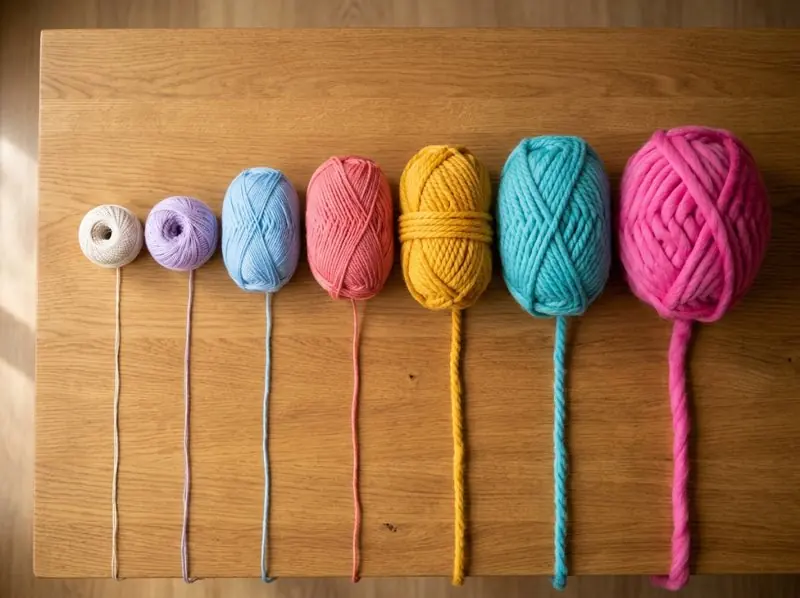
The weight is the thickness, numbered from 0 (lace, very thin) to 7 (jumbo, very thick). The most common are:
- 1 Super fine (sock, fingering): socks and fine baby clothes.
- 3 Light (DK): baby things, light sweaters.
- 4 Medium (worsted, aran): hats, scarves, blankets. The best weight to learn with.
- 5 Bulky (chunky): quick, cosy hats and blankets.
- 6 Super bulky: very fast, very thick.
Fibres
- Cotton: no stretch, shows every stitch, washes well. Great for dishcloths, bags and toys.
- Acrylic: cheap, soft, machine washable, lots of colours. Good for practice and blankets.
- Wool: warm, stretchy, forgiving. Great for hats and sweaters.
- Blends: a mix, often wool with acrylic, to get the best of both.
Reading the label
- The weight number or name.
- The length (metres or yards) and weight (grams) of the ball.
- The hook or needle size to use.
- The gauge: how many stitches and rows make 10 cm.
- The dye lot: buy all your balls with the same number so the colour matches.
Good to knowYour first yarn: a smooth, light-coloured medium (worsted) acrylic or cotton. Avoid dark, fluffy or very thin yarn until you can see your stitches easily.